The Kyoto issue
Walking the Kyoto Imperial Palace grounds in October 2026
The Shishinden disappears under a nine-year roof shelter this month, and almost everything worth walking around it still costs nothing.
By Tomas AlmeidaKyoto's temples, backstreets and slow mornings
From October 2026 the Shishinden, the hall at the centre of the Kyoto Imperial Palace, stands inside a tall temporary timber shelter while its roof is re-thatched, work set to run nine years. Admission is still free and nobody needs a booking to walk in. The park outside the enclosure, Kyoto Gyoen, has no gate and no fee at all.
Inside Seishomon Gate
Kyoto Imperial Palace (Kyoto Gosho) sits behind long ochre earthen walls in the middle of Kyoto Gyoen, and you enter through Seishomon Gate, where bags go through security screening. No booking is needed for anyone. Free staff-led tours leave from inside the gate and run 50 minutes, in English at 10:00 and 14:00 and in Japanese at 09:30, 10:30, 13:30 and 14:30. Places go in the order people arrive, and coach parties are asked to split themselves across the departures.
The route keeps its shape around the scaffolding. You cross the white-gravel ceremonial courtyard, pass the vermilion-and-white Kenreimon gate and walk under cypress-bark roofs to the Oikeniwa pond garden, where an arched stone bridge crosses the water. The hall itself stays out of sight under the timber shelter until the thatching is finished, and a paid guided add-on will not change that.
Plan your Kyoto trip
Live prices from our booking partners.
Free cancellation on many rooms. We may earn a commission when you book.
Applying for Sento Gosho
Kyoto Sento Imperial Palace (Sento Gosho) stands in the same park and can be seen on a guided tour only. Tours are free and capacity-capped. The online application opens at 05:00 JST on the 1st of the previous month and closes four days before your date. You can also apply in person at the Imperial Household Agency office in Kyoto Gyoen, 08:40 to 17:00, closed Mondays. A limited same-day allocation is handed out at Kikyo-mon Gate at 09:00 and 12:30, but a group has to come through the advance application, because that handout will not absorb a coachload.
The garden repays the paperwork. The South Pond carries the earth-roofed Dragon Bridge under a wisteria trellis, and along the waterline the Suhama beach is laid with thousands of flat oval stones set edge to edge. The Seika-tei teahouse stands above the stones.
The gravel avenues of Kyoto Gyoen
Kyoto Gyoen National Garden is open to everyone at any hour, with no gate and no fee. The avenues are pale gravel, wide enough for an ox cart, running dead straight between rows of old black pines and maples towards the long palace wall, and nine monumental gates stand around the perimeter. The Nakadachiuri car park inside the west wall is the standard drop-off and muster point for bus parties, and parking is charged separately.

Two small buildings inside the walls
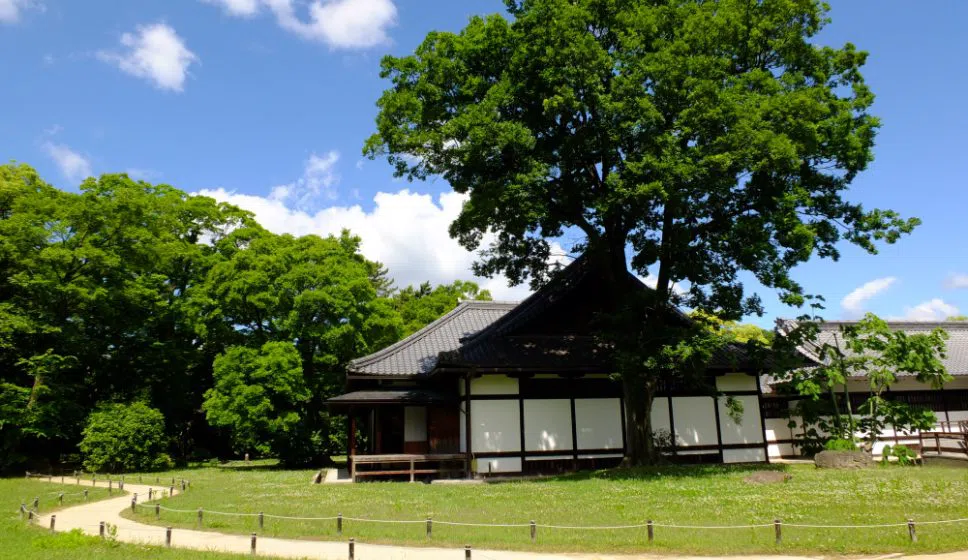
Kan'in-no-miya Residence Site Exhibition Hall, inside Gyoen, is free and takes no reservation. It opens 09:00 to 16:00 with the building closing at 16:30, and it shuts on Mondays and over New Year. The residence is single-storey Edo-period work in white plaster and dark timber, with shoji sliding on to a small courtyard garden that holds a stone well and clipped shrubs. Display panels cover the nature and history of the aristocratic quarter that once filled the park. The rooms are small, but this is the shelter to aim for when rain takes the palace route away.
Shusui-tei Teahouse (Kujo Family) stands on the lip of Kujo Pond, two storeys behind reed screens, water lilies below. The upper room is tatami and tiny, and with the shutters slid back the water fills the whole frame. It opens Thursdays, Fridays and Saturdays, 09:30 to 15:30, with reception closing at 15:15, and it also opens for Jidai Matsuri on 22 October and Aoi Matsuri on 15 May. Entry is ¥300 for adults and free for under-15s.
Tea, sweets and lunch by the wall
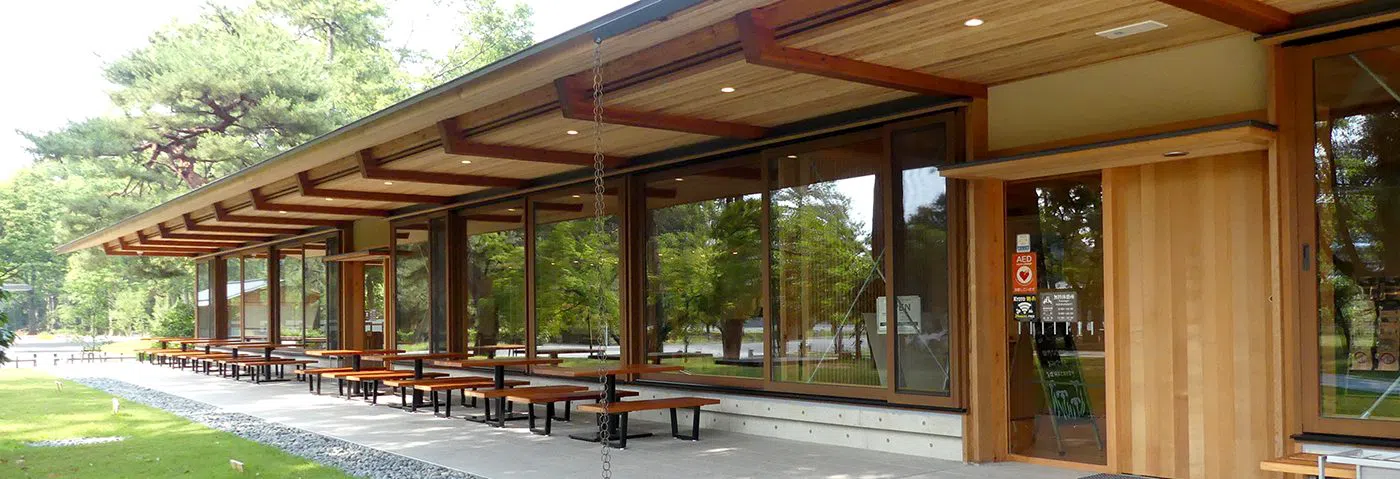
The Kyoto Gyoen Nakadachiuri Rest House sits beside the car park inside the park wall, a low timber-and-glass pavilion with a terrace of pale chairs looking across the gravel and the black pines towards the palace enclosure. Its Higaki restaurant reopened on 1 May 2026. The doors open daily 08:00 to 18:30, and to 20:00 on Saturdays and Sundays, with restaurant last orders at 18:00. A shokado bento is ¥2,500 and a Kyoto-vegetable quiche plate ¥1,800. An Uji matcha latte is ¥800, a Kyoto craft beer ¥1,500.
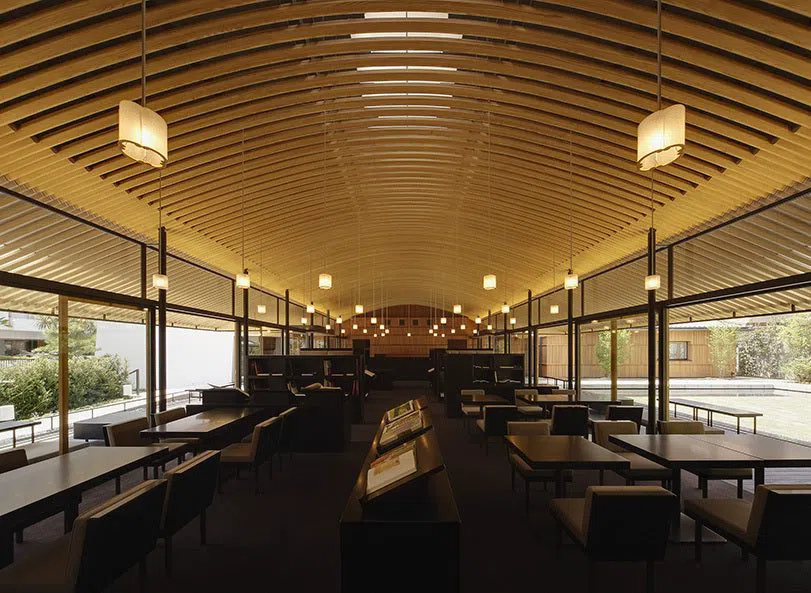
Toraya Karyo Kyoto Ichijo, a couple of minutes off Gyoen's west wall, began in Kyoto supplying the court. The tearoom is modern machiya style behind a long glazed wall that opens on to a garden of moss, stone and maple, and the sweets come out on red lacquer trays, dark-bean mochi with a bowl of whisked matcha. Sweets with tea run ¥1,200 to ¥2,000. It opens 10:00 to 18:00 with last orders at 17:30, and closes on 1 January and the last Monday of most months. Toraya takes no reservations, so expect to wait at the busy hours.
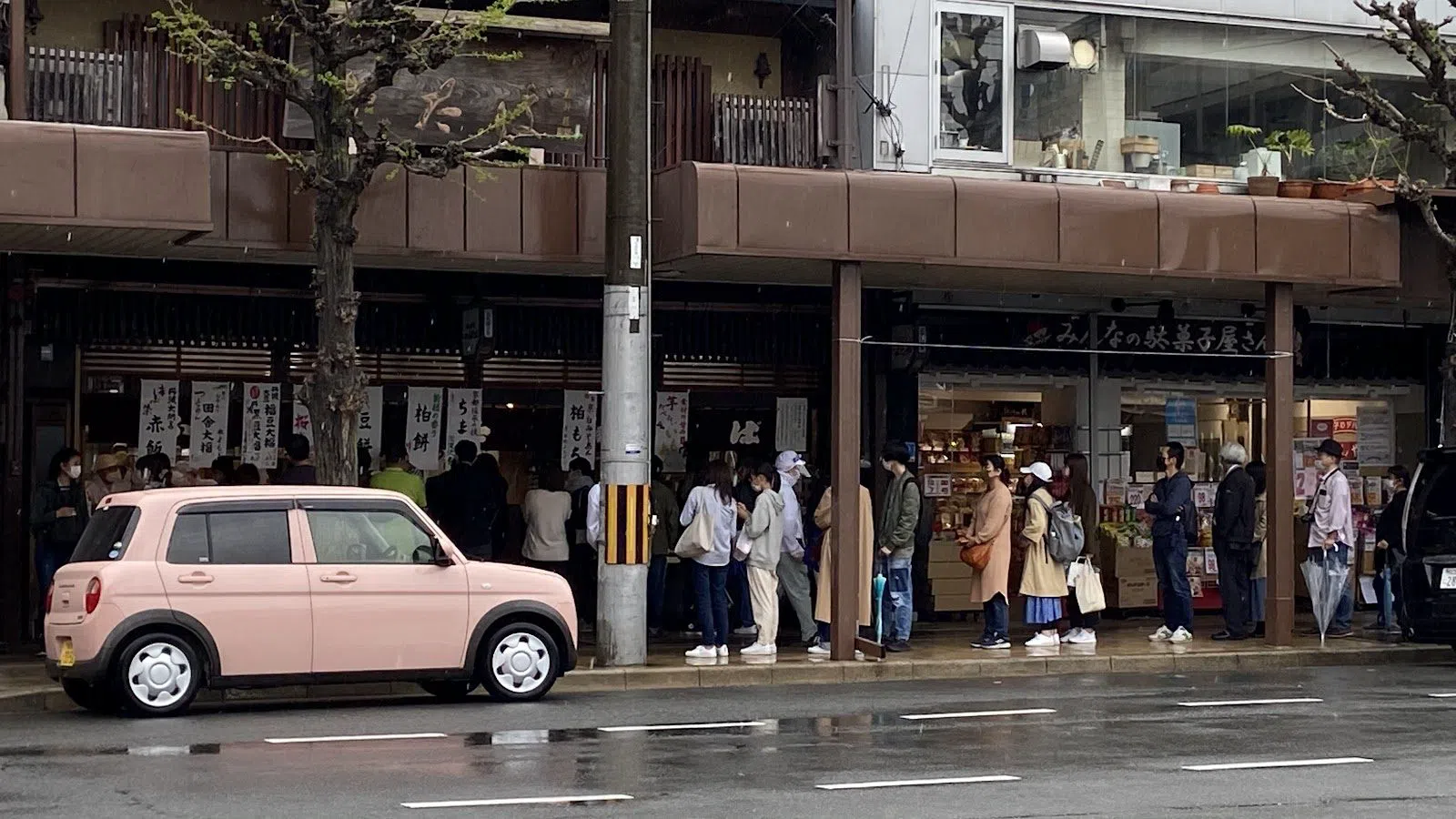
Demachi Futaba is a 120-year-old counter at the top of the Demachi Masugata arcade, 10 minutes off Gyoen's north-east corner. The glass case behind the dark blue noren holds flour-dusted white mamemochi at ¥240 each, and the queue on the pavement outside is permanent. It opens 08:30 to 17:30 and closes on Tuesdays and the fourth Wednesday, or the next day if that falls on a holiday. Payment is cash only, and phoning an order through in advance is the standard way round the queue.
The east wall and Shokoku-ji
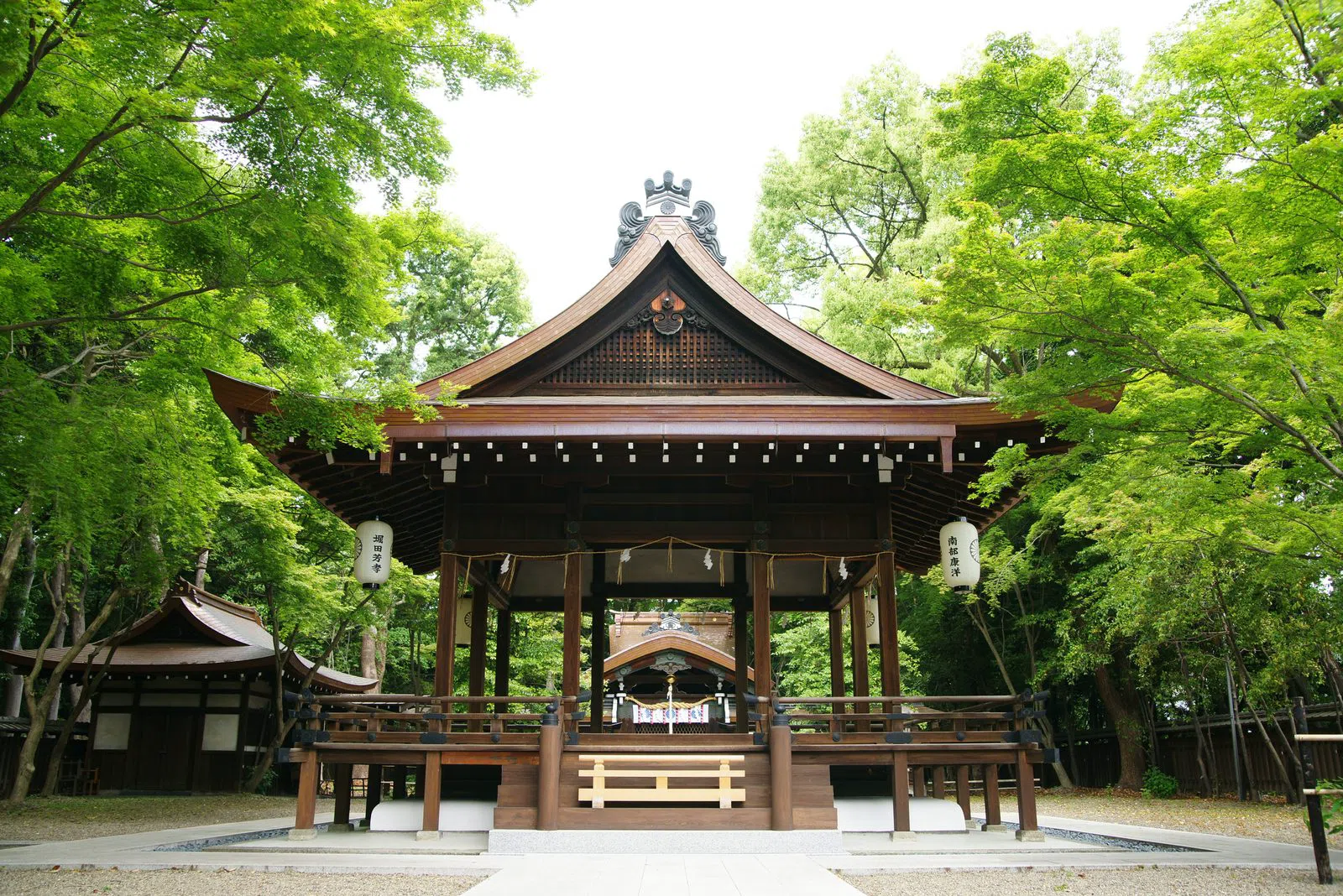
Nashinoki Shrine presses against Gyoen's east wall, and the grounds are free and open through the day. A stone-lantern avenue runs between banks of hagi bush clover hung with paper poem strips, and the clover peaks in late September. At the covered well, visitors fill bottles from Somei with a wooden ladle; Somei is the one of Kyoto's three celebrated waters that has never run dry. The amulet desk works 09:00 to 16:30 and shuts for lunch, 12:15 to 13:15. The approach is narrow, and walking in beats arriving in a mass at the gate.
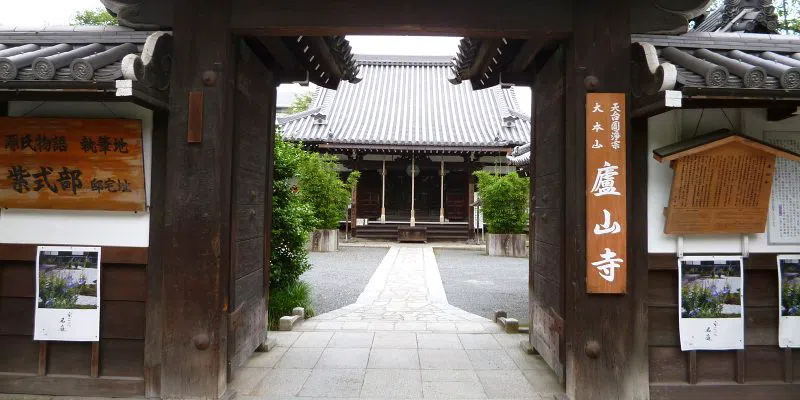
Rozan-ji Temple is two minutes from the palace's east gates, built on the site of the house where Murasaki Shikibu is held to have written much of The Tale of Genji. The Genji-no-niwa is a dry garden, white sand raked against a low rolling bank of moss, purple bellflowers dotted through it, framed by a whitewashed wall and a dark temple veranda that holds very few people. Entry is ¥500 for adults and ¥400 for children. It opens 09:00 to 16:00, and closes on 1 January and from 1 to 9 February.
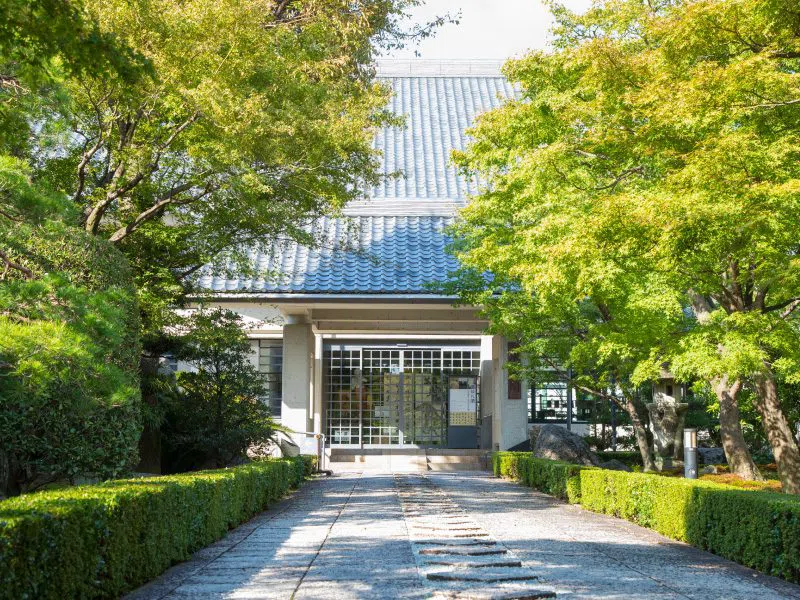
Shokoku-ji Temple and Jotenkaku Museum stands immediately north of Gyoen. A gravel pine avenue ends at the vast dark-timbered Hatto dharma hall, and behind it a low modern museum hangs Ito Jakuchu's ink screens. Its Maruyama Okyo and Ito Jakuchu exhibition opened on 17 October 2026. The museum opens 10:00 to 17:00 with entry stopping at 16:30, and it closes between exhibition changeovers. Adults pay ¥1,000, students ¥800 and junior high entry is ¥500.
Arriving by bus

Sky Hop Bus Kyoto runs two colour-coded loops out of Kyoto Station on a timetable revised in June 2026, and the West line sets you down at Kyoto Imperial Palace (Doshisha University). The whole upper deck is open to the sky, so you look over the parapet at temple roofs and the long palace wall as the bus runs up Karasuma. A one-day ticket is ¥4,300 for adults and ¥2,200 for children; two days costs ¥6,500 and ¥3,300.

Okoshi Bus (Kyoto Teiki Kanko, Keihan Bus) sells seats on scheduled departures from the Karasuma exit of Kyoto Station, where the coaches draw up in the bays under the station's glass frontage with numbered course boards in the windscreens. Reservations go by phone on 075-672-2100 or online, and the line works 08:00 to 20:00. Web bookings carry discounts of up to ¥1,000 on the winter courses running to March 2027, and full-day courses with lunch cost above ¥10,000. The standard courses head for Kinkaku-ji, Kiyomizu-dera and Hieizan. None of them calls at the Gosho.
A licensed private guide is the other way to walk the grounds, and those tours run seven days a week, with a season from 25 October 2026 to 20 October 2027. Book ahead, because the seats are being taken steadily.
Paid interiors nearby
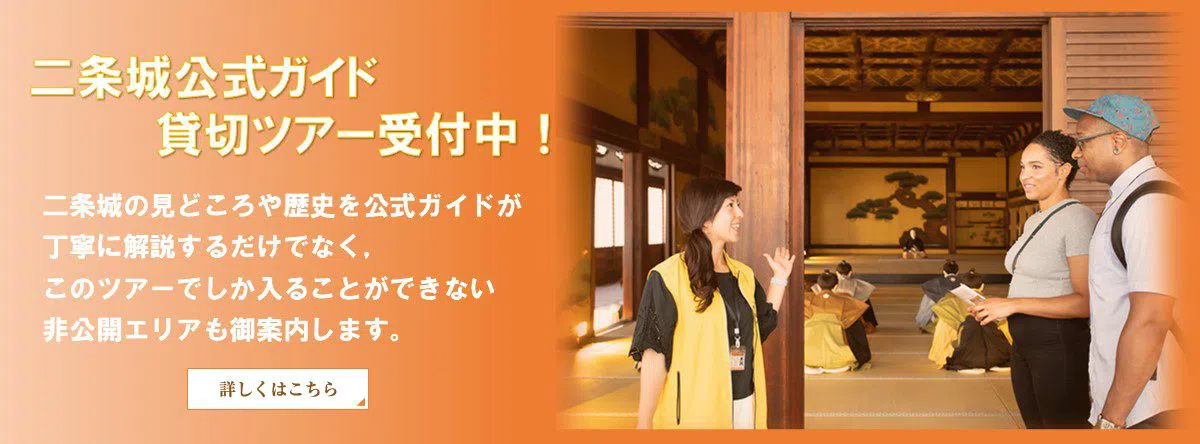
Nijo Castle (Former Imperial Villa Nijo-jo) is 20 minutes south-west, and it gives you the paid interior the Gosho no longer offers while the hall is under cover. The gilded Karamon gate is carved against white plaster, the dog-legged Ninomaru Palace has nightingale floorboards that squeak under every visitor, and a broad stone-walled moat runs beyond. Gates open at 08:45, entry stops at 16:00 and the site closes at 17:00. Grounds are ¥800, grounds plus Ninomaru Palace ¥1,300. Ninomaru shuts on Tuesdays in January, July, August and December, and the castle closes 29 to 31 December. It was built for coach volume and has its own bus parking.
Nishijin Textile Center, 10 minutes west of Gyoen, is free to enter and takes no reservation. The hall is full of clacking jacquard looms and racks of gold-threaded obi bolts, and models walk in layered kimono on a small raised stage at 14:00. From October to March it opens 10:00 to 16:00, and from April to September it runs to 17:00, closed on Mondays. Weaving and dressing experiences are charged separately, from ¥2,000. The centre has its own parking.
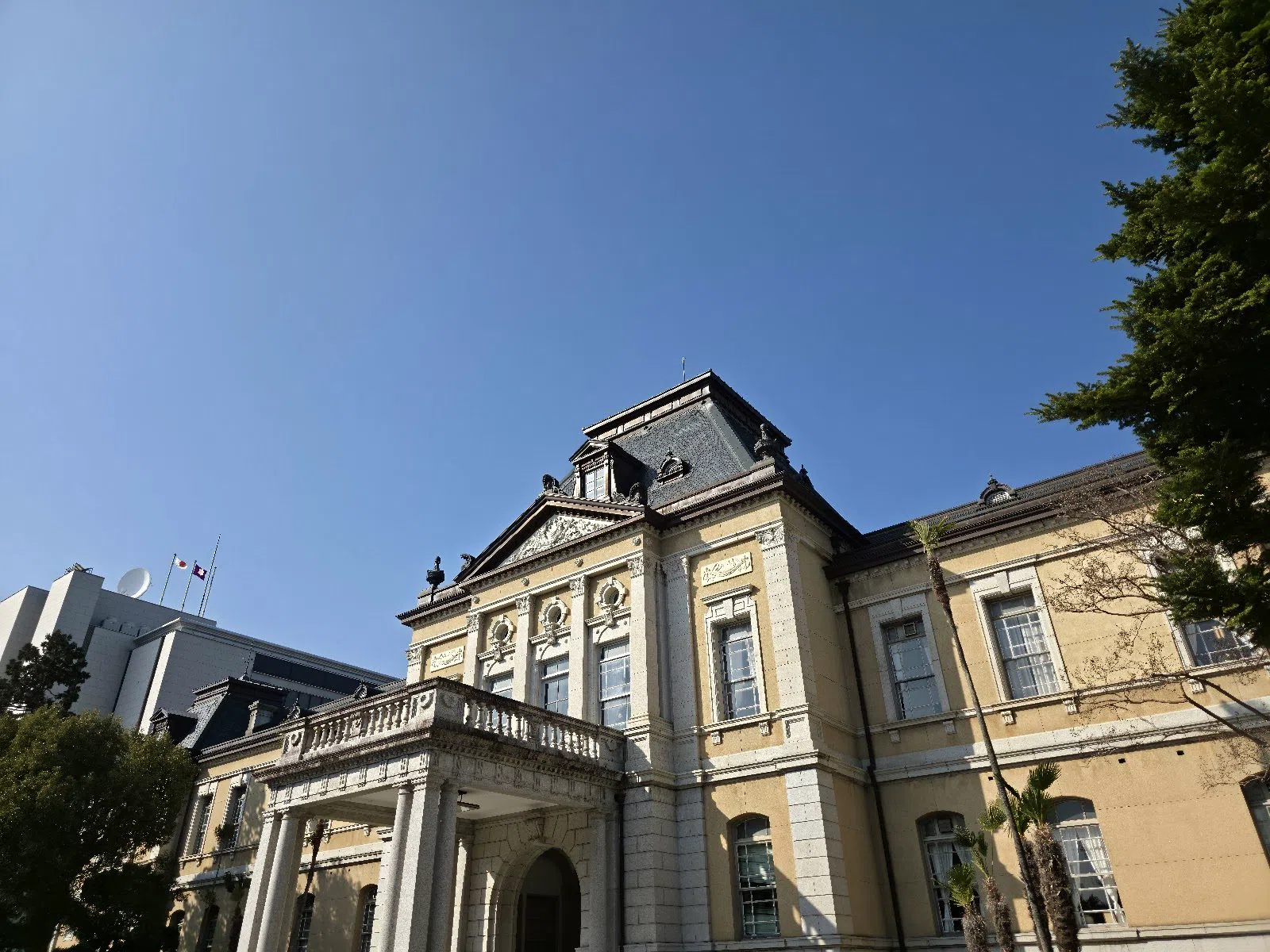
Kyoto Prefectural Office Old Main Building, five minutes from Gyoen's south-west corner, is the oldest government building in Japan still in use, finished in 1904 in Renaissance-revival render and stone. A symmetrical twin staircase rises inside, and the courtyard holds a famous weeping cherry. Entry is free, 10:00 to 17:00 Tuesday to Friday, and on the 1st, 3rd and 5th Saturday of the month. It closes on public holidays and over New Year, and it can close for government business, so call 075-414-5432 before you walk over.
Best time to go in October
Start with the park. Kyoto Gyoen is the part of the site with no opening hour and no closing hour, and the gravel avenues under the black pines are at their best at first light and again at dusk, when the palace gates are shut and the earthen wall holds the last of the sun. Keep the enclosure itself for the middle of the morning, and reach Seishomon Gate well before the start time printed for your language, since places are taken in arrival order.
Mondays close Kan'in-no-miya, the Nishijin hall, the Prefectural Office and the Imperial Household Agency application desk inside Gyoen, so pick another day for this walk. Thursday, Friday and Saturday are the days the Kujo teahouse opens its upper room. For the art, the Jakuchu and Okyo pairing north of the park has been hanging since the middle of the month.
Is it worth it
The walk suits a visitor with a free morning and nothing to spend, since the palace route, the park, the Edo residence and the shrine all cost nothing. It asks for an early start, a guided slot you did not pick yourself at Sento Gosho, and acceptance that the central hall is boxed in for years. A traveller who came to Kyoto to stand in front of the Shishinden should put the money into Nijo Castle.
Before you go
Mondays and Tuesdays close doors across this walk, and the Sento garden needs its application in advance. The mamemochi counter takes cash.
See the Kyoto guide and the Kyoto hotel search.
Before you go
Do I need to book the Kyoto Imperial Palace?
No. Admission is free and nobody needs to book, groups included. Entry is through Seishomon Gate, where staff screen your bag. Free staff-led tours last 50 minutes, in English at 10:00 and 14:00 and in Japanese at 09:30, 10:30, 13:30 and 14:30, with places given out in order of arrival.
Can I see the Shishinden in October 2026?
No. From October 2026 the hall is inside a tall temporary timber shelter while the roof is re-thatched, work expected to take around nine years. You can still see the white-gravel courtyard, the Kenreimon gate, the cypress-bark roofs and the Oikeniwa pond garden with its arched stone bridge.
How do I get into Sento Gosho?
Sento Gosho runs on guided tours only, with a cap on numbers. Apply online from 05:00 JST on the 1st of the previous month until four days before your date, or in person at the Imperial Household Agency office in Kyoto Gyoen, open 08:40 to 17:00 and closed Mondays. Staff hand out a limited same-day allocation at Kikyo-mon Gate at 09:00 and 12:30.
Is there a sightseeing bus that stops at the palace?
Sky Hop Bus Kyoto's West line stops at Kyoto Imperial Palace (Doshisha University) on its loops from Kyoto Station, and a one-day ticket costs ¥4,300 for adults and ¥2,200 for children. The scheduled Okoshi Bus courses leave the Karasuma exit for Kinkaku-ji, Kiyomizu-dera and Hieizan, but none of them stops at the Gosho.
Where can I eat inside the grounds?
The Nakadachiuri Rest House is by the car park inside the park wall and reopened with its Higaki restaurant on 1 May 2026. It opens daily from 08:00 to 18:30, until 20:00 at weekends, and the restaurant takes last orders at 18:00; a shokado bento costs ¥2,500. Toraya Karyo Kyoto Ichijo, a couple of minutes off the west wall, serves sweets with tea at ¥1,200 to ¥2,000.